|
|
Article about the project "Water ist life" in Tamera
(recorded at 11.09.09) |
Article about Sepp Holzers work in america
(04.04.2009) |
Impressions from the visit to Sepp Holzer
(20.11.2008) |
Greetings to all, dear friends!
My trip to Austria and the farm of Sepp Holzer is over.
You cannot write about everything in a dispatch because there was a lot of information (17 hours of video), so I shall try to set out the main points.
Our group consisted of 25 persons-basically the leaders of regional Organic Farming Clubs from Ukraine, at Holzer's we were joined by two families from Germany, one from Poland, and one from Hungary.
We travelled by bus from Uzhgorod through Slovakia, we were amazed not to see garbage anywhere in either Slovakia or Austria, one felt that the people realize their responsibility to their descendants. For me it was a discovery that Slovakia is a mountainous country, all around were beautiful landscapes, well-kept yards with evergreen hedges, beautiful rock gardens, houses covered with flowered plates, many clean mountain rivers and streams. Both in Slovakia and Austria there was a castle on practically each inaccessible mountain, and in the valley were fields, like in the fairytale Puss in Boots: "Whose fields are these?" "Karabas-Barabas." In Slovakia many fields are sown with rape, and in Austria, surprisingly, with poppies (red and purple). There is no border between Slovakia and Austria-this is the Schengen zone.
On entering Austria we noticed entire "plantations" of wind turbines-they are conserving their resources. The quality of the water was a pleasant surprise. Frightened by one of the tour members that the water in Europe is bad, we brought with us seven five-litre bottles of water and...brought them back almost untouched. On the way back we brought with us all our containers in which we had collected the most delicious fresh water from melted snow from the mountain stream near our hotel in the Alps. Along the roads for the entire route from Slovakia to our destination stretched small settlements of 100 to 500 farmsteads with one- and two-story houses, but we saw no people along the entire road, almost no cars either. But on the other hand, we saw deer and pheasants freely roaming around, rabbits would sometimes run by, white swans, ducks, and geese were swimming on the lakes and rivers.
We drove into Vienna for two hours. To tell the truth, the large city did not make an impression on us. The same prisons as in any other city, hustle and bustle, and crowds of people, of which we had really become tired.We stopped in a private boarding house four kilometres from Holzer's farmstead at an elevation of 1800 metres above sea level. To our surprise, there was still snow in spots, the vegetation had just started to bloom. In spite of this, every morning the hardened Ukrainian "polar bears" bathed in the icy mountain lake, which provoked a storm of admiration from the owners of the hotel. Three microbus taxis took us to and from Holzer's.
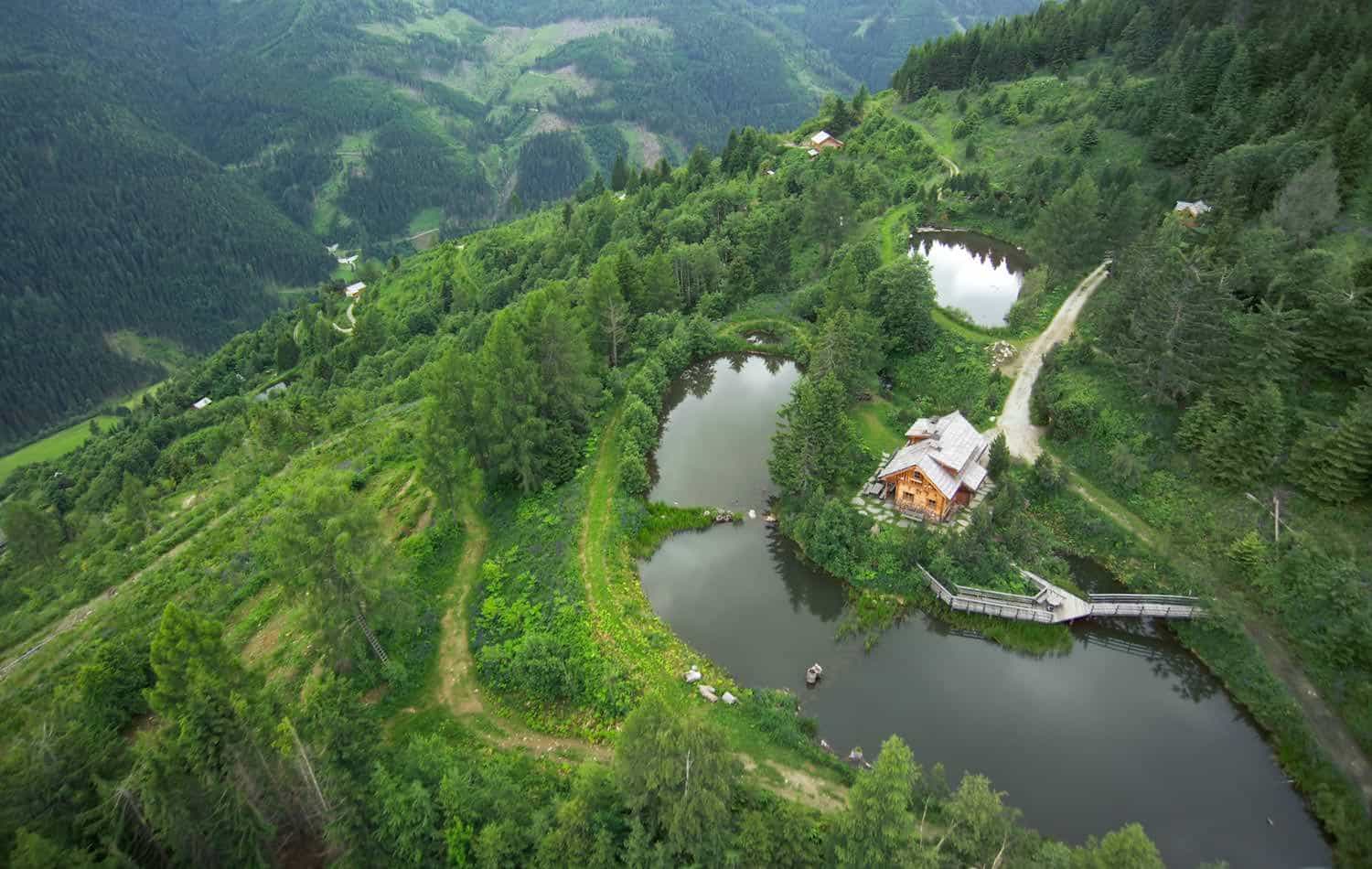
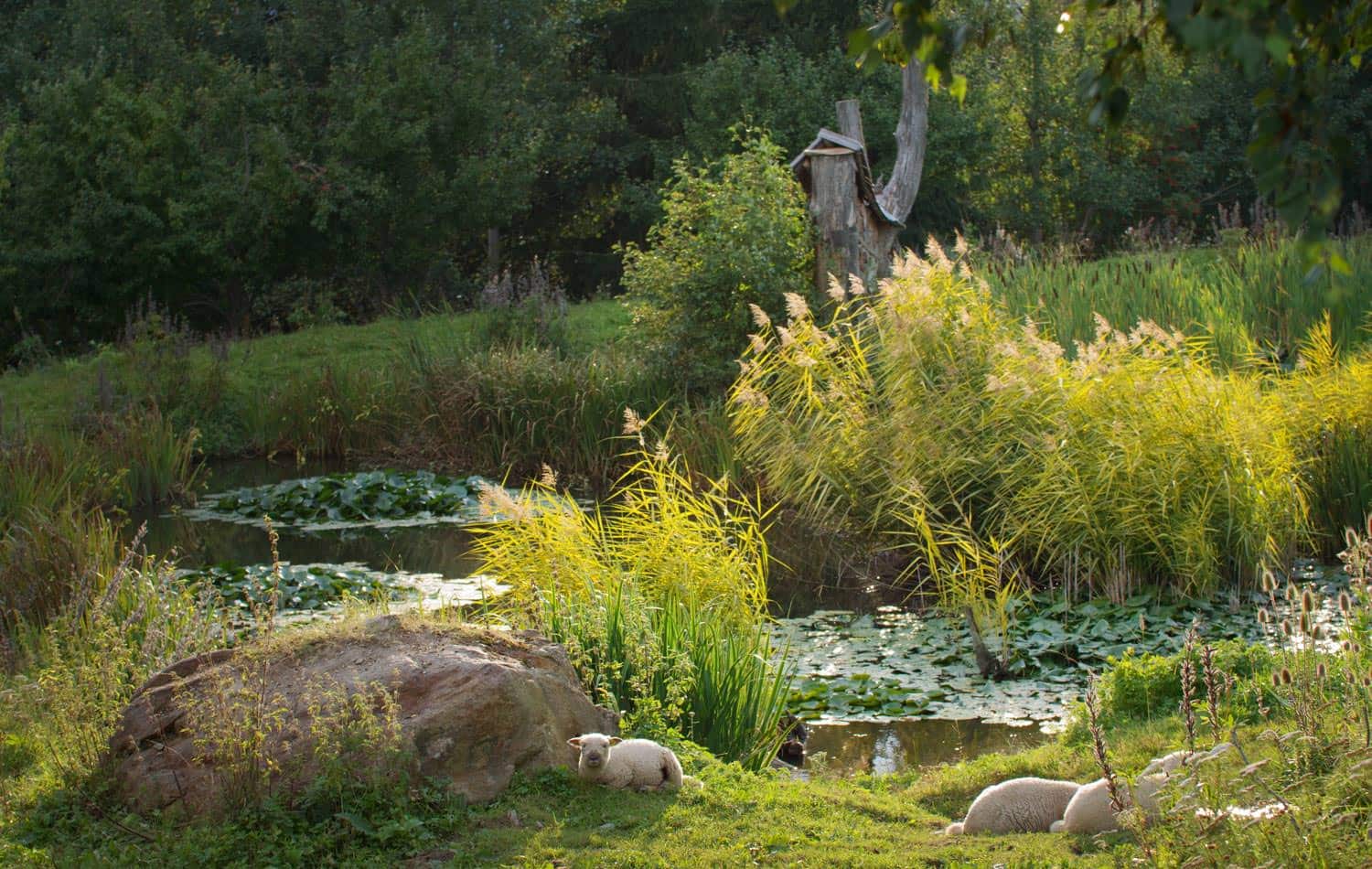
An now, finally, here we were before the gates of the long-awaited paradise. The meeting with the owner of the domain was warm and joyful. At Holzer's, at an elevation of 1100 to 1500 metres above seal level, already the rhododendrons, a multitude of other flowers, and fruit bushes and trees were in full bloom, and all this with an average annual temperature of +4C. All this is thanks to a microclimate, which he created using a system of lakes, rocks, and high ridges, which consist of the trunks and branches of trees, covered with earth taken out of a trench (with a width of the bucket of an excavator, a depth of 0.5 to 1 metre, and arbitrary length). These are the so-called heat traps.
So the first and most important thing I took from Holzer's remarks was that, when restoring a natural landscape, you must provide the area with an open source of water. He said that there is water everywhere, one only must learn to find it. At first he invited specialist water-dowsers, but with time he mastered this skill himself.
The second thing is to shield the parcel from the blowing wind by creating a hedge and high ridges.
Third, create a variety of plant and animal life (including poisonous plants). From the entire neighborhood he dragged sacks of wood ants to his parcel, since he considers them to be the healers of the forest. Holzer is creating, as he expresses it, "edible" forests, where fruit trees and bushes grow in symbiosis with coniferous, deciduous, and decorative plants. He believes that the future of the planet depends on these types of forests, since apart from producing air and renewing the soil, they will be able to eliminate the problem of hunger.
Fourth, the greater in size the parcel of land, the less work there is. Holzer no longer has to do anything, and the income from the domain will grow spontaneously, because nature is generous. The value of each plant planted ten years ago has grown a hundred-fold (and sometimes a thousand-fold), once, moreover, it has reproduced itself many times without the help of man, augmenting his passive income yearly in increasing progression.
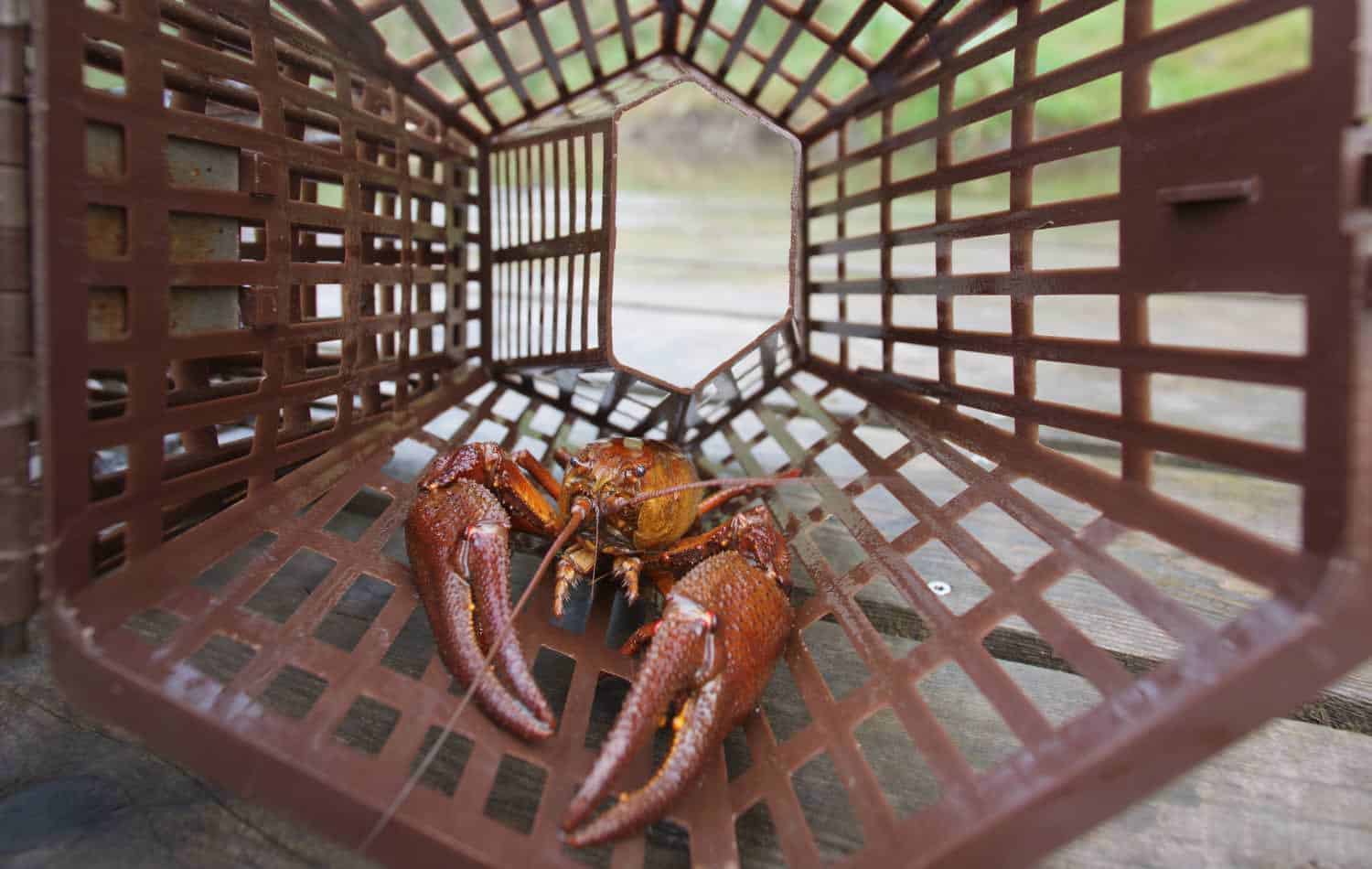
Fifth, his motto: "minimum work, maximum effect." Today his domain is a self-sufficient, self-developing system. I cannot parade the amount of his annual income without his consent, but, believe me, it is impressive, as is the general value of his entire domain. He lives off the sale of saplings, plant seeds, fish, crawfish, mushrooms, nuts, fruits, berries, and vegetables, and now seminars as well. What's more he does not trouble himself with gathering the harvest. On the other hand, there are enough people willing to gather wholesome, ecologically pure crops, and in doing so to pay 18 to 20 times more for the products than in the usual commercial network.
Sixth, try to the maximum extent to plant all plants using seeds, creating beforehand conditions close to natural conditions: stratification in a freezer or snow. He planted very many trees this way, showed us the most wonderful 15-year-old fir grown from a seed. A cedar forest is growing on his land (Siberian cedars and some other type of cedar, which has much larger nuts). By the way, I gave him a cedar seed cone, which made him sincerely happy. He recommended planting seedlings in poor soil, under no circumstances in humus, since plants grown in more favourable conditions find it more difficult to adapt to a natural environment and fall sick.
Seventh, do not trim fruit trees. He believes that this is unnecessary work, and he does not like to do unnecessary work. In addition, they get accustomed to this procedure and become dependent on the intervention of man, become weak and less vigorous. He only trims in the case of a tree disease.
Eighth, do not water the trees when transplanting, plant them in the poorest soil with no fertilizers. Holzer uses an interesting method for transplanting adult deciduous trees and bushes: he wraps the roots of the dug-up plant in sacking, moistens the roots so they will not dry out, leaves them in the shade, and places the crown in the sun, when the tree loses its foliage, it is ready for planting. They take root one hundred percent of the time. Ninth, make maximum use of the abilities of animals to help in the farming. Thus, he uses the ability of pigs to dig up the earth in order to prepare beds for planting, scattering their favourite peas and corn on the area he needs. Tenth, do not copy anyone blindly, including him. Use your own head to think and observe nature. His words: "My university is nature." All his experience is taken from nature. He very often repeats, "Man cannot perfect that which is already perfect, we must simply learn to manage nature wisely." For that reason, when a problem arises with the plants, animals, or soil, he enters into the state of this being, imagines being it, and listens to his feelings, whether he is comfortable in this spot, what is bothering him, what is lacking, what he would like. And the answer comes, and what is very important-it is always right. And if the diagnosis is made correctly, then the treatment will be effective.
Holzer is also convinced that each person has the right to a parcel of land, a vital space, and that only by living in harmony with nature can the world be changed for the better and all social problems of our sick society be solved.
Now he has been recognized both in his own country and others. He is invited to lecture at many universities. The academic elite of Austria has united around Holzer's ideas and, in his name and on the basis of his interviews, has drawn up a document-an appeal to the governments of the countries of the world and the inhabitants of our planet with proposals how to surmount the ecological and economic crisis.
Holzer is invited to countries to renew environments that are being degraded "thanks to" the unwise activities of man. At this time, he is participating in twenty such projects. These are all social products, often he also finances them himself and carries out the restoration of the degraded areas using his own saplings and seeds. He talked about an interesting social project that he implemented in the city of Graz in his homeland. He created a small permaculture garden at a boarding house for disabled persons who get around on wheelchairs. He helped make high plant beds so the disabled could care for them directly from their wheelchairs, sow the seeds and gather the crops. The effect of this project was staggering. There was a fundamental change in the psychological states of the persons, who experienced an interest in life and had a sense of their own significance by independently providing themselves with food products and communicating with the living creations of God.
He spoke a great deal more about his projects, but you can read about them in his book, The Rebel Farmer: Sepp Holzer.
Let us return to our seminar. The first day the seminar was conducted completely by Sepp himself. The next day Josef, his 27-year old son and successor, became involved. A bright and kind young man, Josef made a very good impression on us. I think he also liked us, since we displayed a lively interest in their family experience and got to the bottom of the smallest trifles, and he discussed it in all its details with great willingness. And truly, in the planning and creation of any feature of their domain, these people thought through everything so competently that there was nothing to cavil at. The main thing is that the materials at hand were used everywhere, with minimal financial and labour expenditures.
I must also speak about Veronika, Holzer's wife. We almost never saw her. But we savoured the fruits of her invisible activity. For dinner she served us masterpieces of the culinary art: fruit-cakes of coarse flour of their own making, produced from "Russian grass," as they call it. Just what this was, I do not know to this day. Sepp explained that this is an original grass, either one-kernel or two-kernel. Its seeds, at least, are in a small package with a seed mixture that he distributed to all the participants in the seminar. This grass may be perennial, if it is mowed and not allowed to form ears, the blades are in no way distinguishable from ordinary grass. I shall sow it, grow it on my parcel, then I shall share it with others.
Well, I have to confess, that in spite of the fact that I am now a cheese-eater, I did not deny myself the pleasure of tasting the culinary novelties prepared by Veronika.... And I confirm that everything was, well, verrry delicious! We were also treated to the most aromatic home-made tea from alpine grasses, a liqueur made from white elder, and the next day the completely staggering taste of apple kvass prepared without sugar. By the way, with tea we were served the choice of white or brown, unrefined sugar. At the hotel too, it should be noted. Well, I also decided to distinguish myself, and in gratitude for the efforts of our hostess, decided to make her work in cleaning up the premises after dinner easier-I got the people moving, washed all the dishes myself and cleaned the crumbs off the table, which elicited the considerable, but pleased amazement of Veronika.
Time is inexorable, and our stay in this alpine Eden was drawing to a close. That day was sunny, we warmed ourselves among the wholesome unruliness of alpine nature, intoxicated by the keen mountain air filled with the scent of flowers and pine needles, enchanted by the hospitality and kindness of our hosts. And we did not want to leave this place to go anywhere else, we wanted to prolong the joy of interacting with like-minded persons endlessly.
But the moment of parting came nevertheless. The young Holzer was given some Fokin cultivators, which had been smuggled across the border by Yura Goncharuk (Kiev) and Dima Pelykh (Kherson-the organizer of the trip). A master class in working with the cultivator was given. Then there were many photographs with Josef, autographs from the author of the books, exchanges of business card and addresses with other participants in the seminar. We probably would have sat up until the wee small hours if Sepp did not have to go the following day to his next lecture at some university. We inevitably had to say our goodbyes. In chorus we sang the Ukrainian song "Be healthy, live well, we are setting off for home, to our little hut." Mutually pleased, both hosts and guests, we parted.
That evening at the hotel a woman from the German group approached us. It turned out that she was a follower of Anastasia, in Berlin she works in the deployment of computer technologies. And again there was a flurry of delight and emotions, an exchange of addresses! It turned out that over the entire period of putting on seminars, 170 thousand Germans have already visited Holzer's.
I must also tell you about the family that are the publishers of Holzer's book and its translators into Russian. They are the Russian Germans Edward and Angelika Scheck, and four of their children. Edward had been the interpreter at our seminar as well. The family is very interesting. The children are supporters of the idea of the creation of kin's settlements. In Germany they bought a parcel of land for a kin's domain, 50 ares (an are is one-hundredth of a hectare) for the time being, but they plan to enlarge this to at least a hectare. They have been acquainted with Holzer for a long time, they were the ones who first brought the film Permaculture in the Alps to Russia and translated it into Russian. They use permaculture methods on their own land as well. Now they are digging a lake. Angelika shared with us some of her experience in rational farming.
So, for example, she plants potatoes in the following manner: since a lot of earth is being obtained in digging the lake, Angelika places the potatoes directly on the flattened grass and covers it with a bucket of earth. On this little mound in a circle she plants about five bushes of strawberries, in the middle it is possible to stick a couple of kernels of corn. When they are ripe, the potatoes come out, while the strawberries continue to grow.
In addition, having experienced much suffering in the birth of her first two children at a maternity home and having undergone eight operations, Angelika, with the support of her husband, gave birth to her next two children on her own at home. Now she teaches and prepares other families for home birth. She receives calls from all corners of Germany, and she travels throughout the country to help with the appearance of a new person in the world painlessly and in normal conditions.
Angelika dreams of visiting the Kiev-Pechersky Monastery, and I invited all of them to visit me, including a visit to Lubskoe, and told them of my dream to conduct seminars in Lubskoe according to the programme of the "Settler's school." Angelika answered that she would be able to organize tours for these seminars, it turns out that there are many people in Germany who would like to take this type of training.
This family is now working on the translation of Holzer's second book, which provides a more detailed description of permaculture methods.
Our last evening in Austria concluded with a session where we reflected back on our stay at the seminar. The group gathered in the Goncharuks' and Podolkhovs' hotel room, and each person who so desired shared their impressions. Much gratitude was expressed to Dima and Anya Pelykh from Kherson, who got us moving and, strictly speaking, organized the trip. After his return to Uzhgorod, Dima underwent a "pumping" procedure, which was documented on video and in photographs.
At the session, I was especially touched by the words of Petr Trofimenko, the founder of the Organic Farming Club movement. Petr said that the time had come to broaden the functions in the activities of the Organic Farming Clubs and, together with the creation of clubs, it was necessary to support the initiatives of people, active members of the movement, in their creation of practical educational centres on the basis of their farmsteads, where each interested person, together with theory, could obtain practical skills as well.
Petr put my own thoughts into words. And I shared my plans for the near future with everyone. Since the prerequisites for the founding of this type of practical educational centre had already long ago been created at my place in Lubskoe, I was planning in June of this year to go through with the formalization of this matter in earnest. Petr Trofimenko and Yura Goncharuk promised to support my initiative.
And the fruits of our talks are already evident: from the following week to the end of the summer I have been working on shifts (every second week), to spend more time in Lubskoe and to make the transition to self-sufficiency by creating a branch of the Kiev club at the place of my residence (three days a week in Kiev, four in Lubskoe). Naturally, it is complicated to undertake such an affair on my own, and so I am seeking companions!!!
By the way, whoever has not yet become a member of an Organic Farming Club can now do so through me, as well as order the club's products.
This is the amazing way that my trip to visit an amazing person has ended!!!
In the near future I shall try to finish the processing of the photographs, and I shall ask Yakov to place them on our site.
I want to remind anyone who has not yet filled out the questionnaire that all this is still current, and I ask you to send them to me, even in draft form.
That's all for today.
Best wishes,
Oksana Inte
oki05@ua.fm
Natural Farming Practical Educational Centre, 6 June 2008
The material was sent by the newspaper Byt Dobru, http://gazeta.bytdobru.info
Subscription code for the newspaper Byt Dobru in the Catalogue of Ukrainian Publications: 96421; in the Russian catalogue Newspapers. Magazines: 21523; in the Belarusian catalogue Publications of the Russian Federation, Publications of Ukraine: 96421.
http://gazeta.bytdobru.info/
Translation copyright http://www.ringingcedarsofrussia.org/ |
Artikel in THE EARTH - Online Monthly Newspaper
(28.05.08) |
 the article |
Permacultur Magazine Nr. 53
(18.09.07) |
 page 1 |
 page 2 |
 page 3 |
 page 4 |
|
|
|
|